UPDATED 11/19/2025
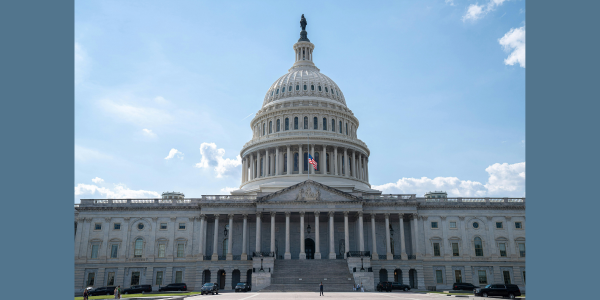
“On November 12th, President Trump signed into law a continuing resolution (CR) to reopen the federal government after the longest government shutdown in the nation’s history. The bill itself keeps the government funded through January 30th and includes a “minibus” of spending bills that fund the Department of Veterans Affairs, the Department of Agriculture, and Congress itself through September 2026. Likewise, the CR reinstates and extends the Medicare telehealth flexibilities through the end of January, reverses the layoffs of federal workers that occurred during the shutdown, and bars further reductions in force at the federal level until February of 2026. Despite the consensus reached by lawmakers, no agreement was found on how to approach the expiring ACA tax subsidies that are set to expire at year’s end. However, Republican leadership ensured Senate Democrats that a vote on subsidies would be held before Congress adjourns in late December for the holiday season – although it remains unclear how the vote will unfold.
While the future of ACA subsidies is unknown, Congress has begun shifting its focus back to its healthcare priorities including to PBM transparency, Medicare Advantage oversight, and drug pricing, among others. Some lawmakers are pushing for an end-of-year health package, but the timeline of the CR could complicate these efforts. In parallel, C-TAC continues to advocate for our core initiatives and priorities that are outlined below.”
Orginal Post
During these difficult partisan times, C-TAC remains a bipartisan force working collaboratively to ensure everyone facing a serious illness has the care that they need, when and where they need it, and that their care preferences are respected, recorded, and honored.
Even as gridlock persists in Washington, progress continues at the state level. Building on the groundwork laid in Hawaii and California, work is underway in 12 additional states to broaden access to palliative care. This year, New Jersey joined their ranks, taking a major step toward a Medicaid State Plan Amendment (SPA) to support palliative care services.
In this special update on the government shutdown, we review the current landscape and, importantly, look ahead to important opportunities for serious illness care beyond the current federal funding dispute.
What’s Happening Now
Government Shutdown:
It remains unclear how long the current shutdown will persist. As of this week both parties remain dug into their respective positions. The duration of the closure will dictate how much legislative time is available for other priorities and how quickly Congress can return to “regular order”.
- Affordable Care Act (ACA) Subsidies/Advance Premium Tax Credits (APTCs):
Subsidies under the ACA are the main point of contention in government funding negotiations with Democrats insisting on addressing the issue in the appropriations bill(s) that move forward and Republicans calling for a clean funding package. Recent developments on Capitol Hill signal some progress on an extension of the subsidies – which are set to expire at the end of this year without congressional intervention – although the details of an agreement for an extension remain elusive. Democrats are calling for a permanent extension of the subsidies whereas many Republicans don’t support them at all. A minority of GOP lawmakers are interested in negotiating a compromise to avoid ACA marketplace premiums rising significantly at the beginning of next year, but time is running out to accomplish this.
- Outlook & Potential Off-Ramp:
Despite little progress towards a funding compromise being made over the past month between Republicans and Democrats, an off-ramp for lawmakers may be approaching due to continued public pressure. A variety of vital programs are set to run out of funding this week without federal intervention, including the Supplemental Nutrition Assistance Program (SNAP) and the Special Supplemental Nutrition Program for Women, Children, and Infants (WIC). In parallel, the open enrollment period for the ACA marketplace is set to begin this Saturday, when enrollees are expected to see steep increases in their premiums – all of which adds to the mounting public pressure on lawmakers. Recent Republican polling shows that allowing the APTCs to expire at year’s end could prove to be a major sticking point for GOP candidates in the 2026 election, with many red states expected to be impacted most by rising premiums. Similarly, Congress’s polling as a whole also continues to sink dramatically, with just a 15 percent approval rating in the month of October. These external pressures on lawmakers could result in Republicans giving Democrats an extension of ACA subsidies, especially given the lack of appetite for any further extension of the shutdown from lawmakers on either side of the aisle.
Looking Ahead: What We’re Fighting For
Once lawmakers reach a deal to reopen the government, likely with a short-term Continuing Resolution (CR), Congress is expected to shift its focus toward passing an end-of-year package that contains a variety of legislation touching several different policy areas, including healthcare. Expected areas of focus include PBM transparency provisions, Medicare Advantage oversight, drug pricing issues, and a variety of other topics. C-TAC will actively work to include our priorities (below) in the end-of-year package.
In addition to the opportunities below, we continue to work with policymakers in spreading high-quality care models:
· Refine and Strengthen Care Models in Collaboration with CMMI – C-TAC continues to engage closely with leadership at the Center for Medicare and Medicaid Innovation (CMMI) to improve models affecting seriously ill populations, including components of ACO REACH High-Needs, Kidney Care Choices, and GUIDE. C-TAC has also provided targeted recommendations to enhance caregiver support in future demonstrations and integrate provisions that better address the needs of individuals living with serious illnesses.
· Advancing Supportive Cancer Care (SCC) as the National Standard – In partnership with the Sheri and Les Biller Foundation & the Together for Supportive Cancer Care Coalition, C-TAC is finalizing a comprehensive policy agenda designed to educate policymakers on the value of supportive cancer care for patients and families. C-TAC also continues to collaborate with the SCC Coalition to strengthen advocacy efforts and elevate the profile of this issue among lawmakers on Capitol Hill.
· Mobilizing States to Adopt Palliative Care Services – States are not only developing new services for those with serious illness but also setting important national policy precedence with CMS, making the adoption of these models easier for other states. C-TAC is working with our partners, TFA Analytics, NASHP and state coalitions, to develop a national policy agenda to spread this work faster.
C-TAC Legislative Priorities
Advance Care Planning
Opportunity: Improving Access to Advanced Care Planning Act (S.2865 – 119th – sponsored by Senators Warner (D-VA) and Collins (R-ME)
Ensuring access to advance care planning (ACP) counseling and advance directives is a cornerstone of C-TAC’s policy agenda. C-TAC and our members strongly support the elimination of the patient co-pay for ACP services and enabling social workers to bill for providing ACP. CTAC continues to promote extending telehealth flexibilities, including audio-only services, to ensure access to ACP for individuals who may face barriers to in-person or video-based care.
Outlook: Standalone legislation rarely garners sufficient support to advance independently through Congress; however, there remains potential for inclusion in an end-of-year legislative package.
Community-based Services and Supports
Opportunity: Older Americans Act Reauthorization Act (OAA) (S.2120 – 119th) and use of Medicare and Medicaid dollars for cost-effective community-based services.
C-TAC is committed to bridging the traditionally siloed disciplines of medical care and social services by advocating for targeted funding to aging and disability network services to better support individuals with serious illness in their communities. A key component of this effort is increasing funds for the Older Americans Act, which provides services that support older adults with serious illness.
Outlook: The OAA authorization expired in September 2024. Reauthorizing the law is important to protect its funding, continuing to modernize the Act, and support programs for older Americans with serious illness who need community-based supports and services. While the bill is a lifeline for a variety of aging initiatives, current funding levels fail to meet the growing need of today’s older adults and should be revamped to reflect the rising costs associated with caring for this population and their caregivers. The OAA reauthorization has a good chance of passage this year or early next year, although funding is likely to remain near previous year’s levels.
Palliative and Hospice Care
Opportunities: Hospice CARE Act (H.R.9803 – 118th – sponsored by Representative Blumenauer); Palliative Care and Hospice Education and Training Act (PCHETA) (S. 2287 – 119th – sponsored by Senator Baldwin (D-WI), H.R. 4425 – 119th – sponsored by Rep Carter (R-GA)).
C-TAC is committed to improving program integrity and quality through increased consumer protections, quality assurance, and safeguarding consumer rights. C-TAC supports modernizing the hospice benefit to address the limitations of the six-month prognosis rule and the need for concurrent care in addition to encouraging lawmakers to permanently allow hospices to conduct face-to-face recertification for hospice eligibility via telehealth. Additionally, C-TAC is committed to addressing critical gaps in coverage for palliative care.
Outlook: As noted above, standalone legislation rarely garners sufficient support to advance independently through Congress; although there is some chance that parts of these bills could be included in an end-of-year legislative package, discussions with Hill staff and stakeholder groups lead us to believe that much work is needed to update and expand the hospice modernization legislation before it will be considered for mark-up. There is some new support for PCHETA, but its cost remains a sticking point for fiscally minded lawmakers.