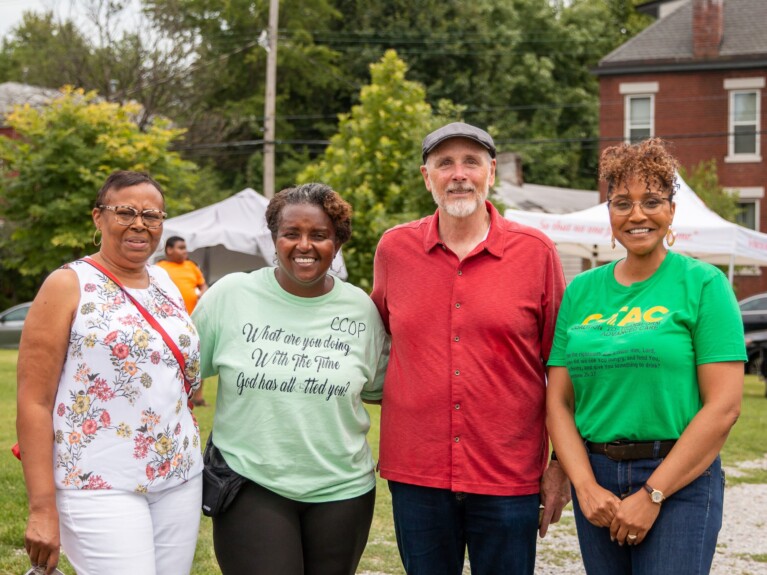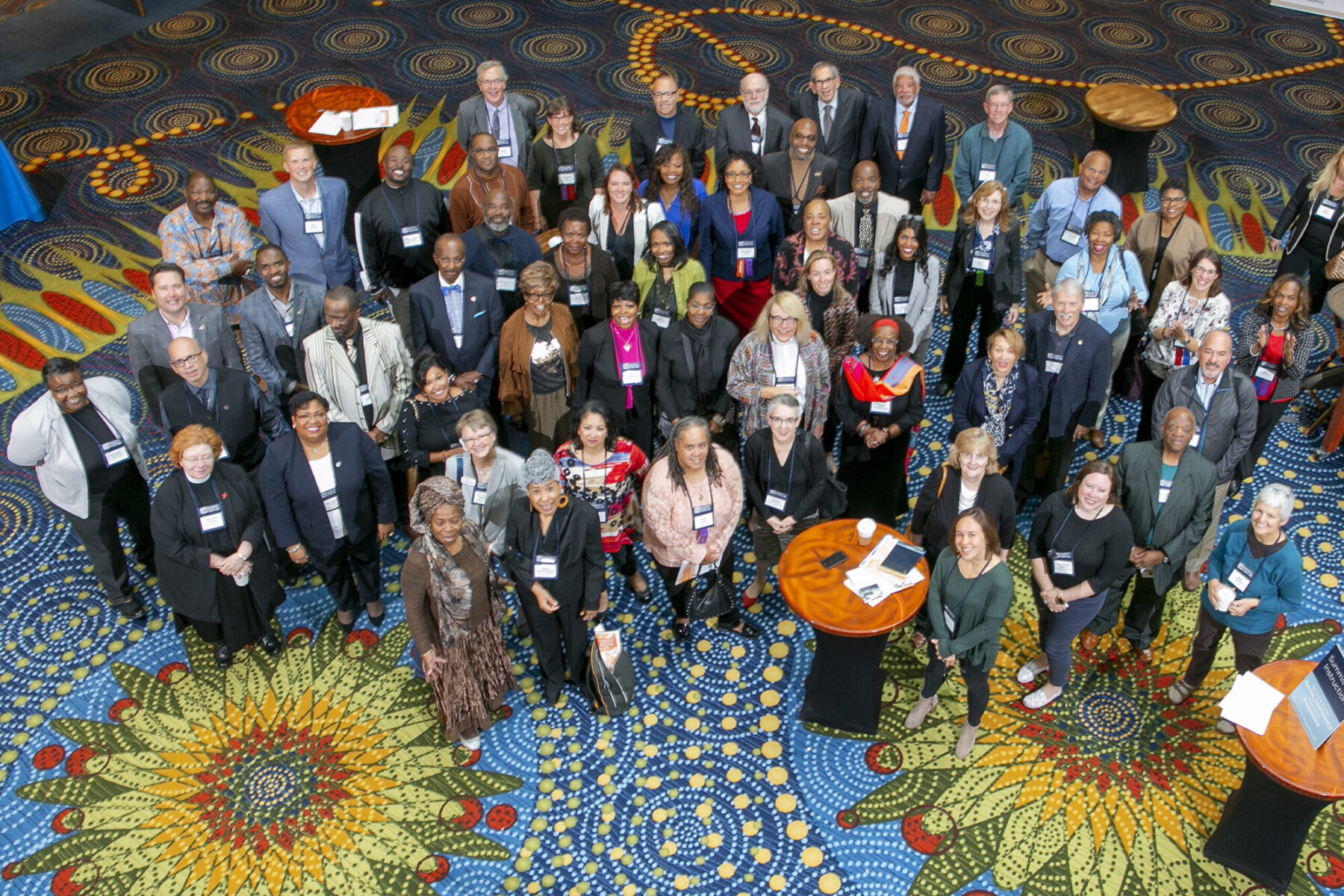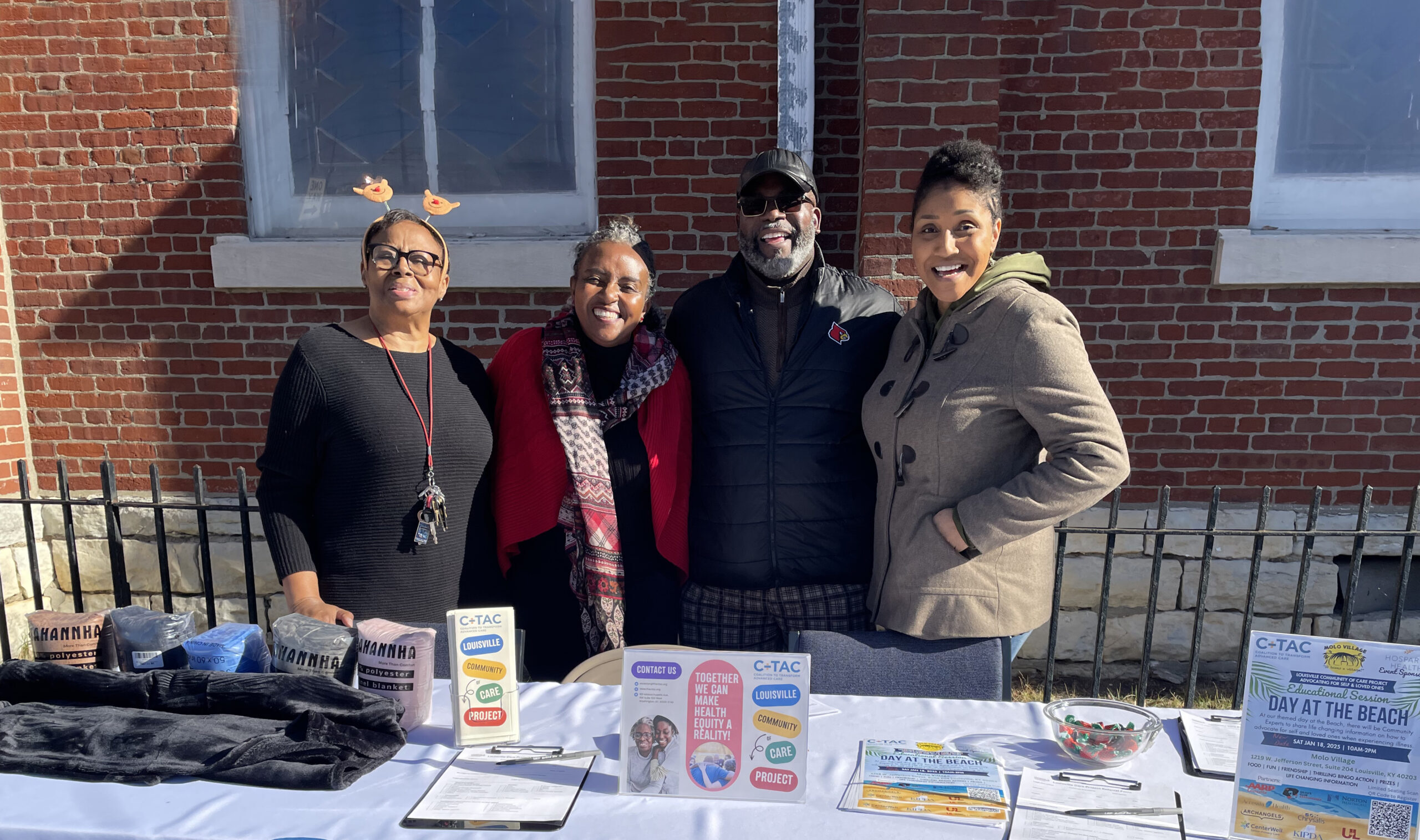
Our goal with supporting local leaders in the community pilots below is to be a national catalyst – to make helpful connections among our Coalition members, share and disseminate resources on what’s working, and build advocacy support for expanding the capacity of community-based organizations.
Engaging and collaborating with faith communities is a critical aspect of C-TAC’s advocacy around community models. Faith leaders have deep-rooted relationships within their congregations and are uniquely positioned to provide crucial guidance and resources to those who live with advanced illness and their families.
Faith leaders play a special role in serious illness care: their training, life experiences, and community connections build deep insight into how to support those living with advanced illness and their loved ones. At C-TAC, we commit to uplifting the special wisdom of faith leaders in this space and supporting special faith programs in vulnerable communities.
The Louisville Community Model of Care Project
C-TAC formed the Louisville Community Model of Care Project in 2020 as a response to COVID-19 and the disproportionate health care black patients receive. We targeted Louisville, Kentucky due to the overwhelming end of life and at risk health care needs within its community in the 40203 zip-code. Forty one percent of this population have an annual income below the federal poverty guideline. Forty eight percent of the Black population living in the 40203 zip code are living below the federal poverty guideline.[1] Black Americans face a disproportionate burden of morbidity and mortality from many serious illnesses.[2] “The cumulative impact of systemic racism across housing, education, and criminal justice results in Black families and communities of color having less access to economic and social resources to support health and well-being,”[3] The need for a sustainable community model approach that addresses these disparities is critical if health care inequities will be resolved.
 The Louisville Community Model of Care Project serves in partnership with faith leaders who are actively involved in places of worship where the majority of the parishioners are black living in and around the 40203 zip-code. Cunningham (2018) stated, the health of people with low income often suffers because they can’t afford adequate housing, food, or childcare. The risk of health problems within this population is increased, they become unable to afford care, and are likely to have far less access to preventive care services. Affordability is not the only adverse conditions in this community. Access, opportunity, structural, institutional and systemic racism pose as barriers to qualitative end of life health care. The Louisville Community Model of Care Project serves as a solution to these inequalities.
The Louisville Community Model of Care Project will serve as an impetus for model replicability within communities sharing similar demographics with similar health care needs. The University of Louisville will oversee key elements for replicability include metrics regarding a consumers’ accessibility to quality, standardized health care, as well as provider’s guidelines for effective partnerships and sustainability plans. Demonstrated outcomes will provide the necessary data needed to transplant the model of Louisville Community Model of Care Project throughout the United States.
Our Goals (2024-2027)
There are two key elements that, together, form a uniquely innovative and sustainable approach to achieve health equity and improve population health:
- Meet needs now by building a sustainable case for supporting community leaders, such as clergy, who serve as trusted conveners of those who are the underserved and under-resourced. These community leaders will increase access to the navigation services of Community Health Workers, which will ultimately help increase community members access to health insurance, food security, caregiver support such as mental health, and direct patient clinical care.
- Identify and address the root cause of needs with permanent solutions through asset mapping of community, state and federal/national stakeholders and identifying the case for support. As part of this process we will also identify existing financing opportunities in healthcare (e.g., value-based payment), social services and supports, and state and federal opportunities.
Our Methodology and Evaluation
- We will focus on testing the Community of Care Model in Louisville, building on two years of community needs assessment and coalition building
- Researchers from the University of Louisville will oversee key elements for replicability to include metrics regarding a patient’s accessibility to quality, standardized health care, as well as provider’s guidelines for effective partnerships and sustainability plans.
Places of Worship & Project Leads:
- Rev. Dr. Angela Johnson | Grace Hope Presbyterian Church
- Rev. Lance West | Lydia House / Riverview Baptist Church
- Pastor Alma Wooley| Christ Cathedral of Praise
Partners:
- AARP
- Accessia Health
- ARCHANGELS
- CenterWell
- Chrysalis Ventures
- Gilda’s Club
- Hosparus Health
- Kentuckiana Regional Planning & Development Agency
- Norton Healthcare
- University of Louisville
- University of Louisville Trager Institute
[1] Poverty Status in the Past 12 months by sex by age for Zip Code Tabulation Area (ZCTA) 40203
[2] Meyer PA, Penman-Aguilar A, Campbell VA, Graffunder C, O’Connor AE, Yoon PW. Conclusion and future directions: CDC Health Disparities and Inequalities Report – United States, 2013. Morbidity and mortality weekly report. Surveillance summaries (Washington, D.C: 2002). 2013;62 Suppl 3:184-186
[3] Ellis, Wendy, Dietz, William H, Kuan-Lung Daniel Chen. Community Resilience: A Dynamic Model for Public Health 3.0. January/February 2022, Vol. 28, (Washington, DC 2022). Number Supp S19.