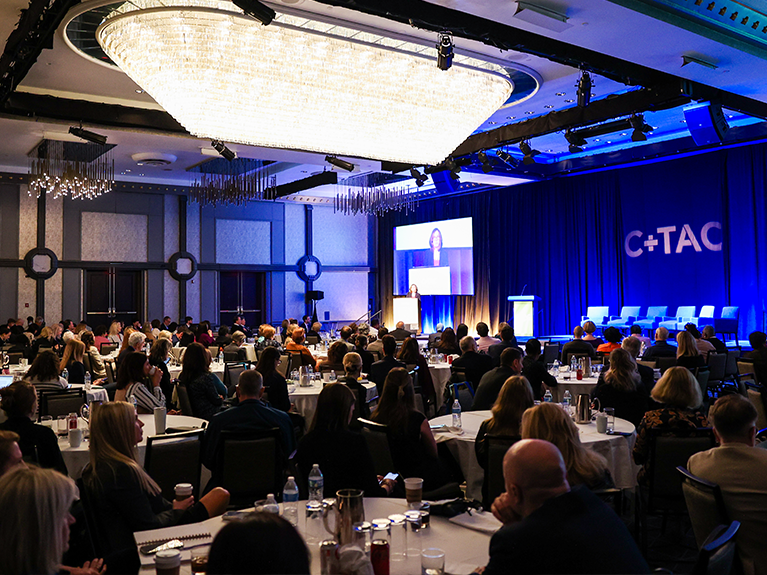
On October 24, I attended my first in-person Summit of the Coalition to Transform Advanced Care (C-TAC). I had the honor of joining my friend and inspirer Alexandra Drane to give a keynote address. As Thanksgiving draws our focus to gratitude, I thought I’d share my highlights of C-TAC’s remarkable gathering.
First, it was a joy to be in person together with several hundred people focused on improving the care that people with advanced illness – many approaching the end of life, others with complex conditions that require deep, long-term clinical and social support. I love working with innovators who bring both passion and competence to their task, and the C-TAC crowd brings those characteristics in spades: Grounded in the realities of today’s healthcare system, heavily weighted with people in the hands-on reality of the bedside yet believing that better is possible.
Second, much of the Summit focused on the unpaid caregiver. Somehow pandemic stresses and isolation seem to have made people more willing to see and share the hard realities have faced, or will, as caregivers for family or friends. I left the Summit with a sense that C-TAC’s substantial network and influence may coalesce around seeking policy and social changes in this area of nearly universal, but unacknowledged, hardship.
Third, I loved sharing the stage with Alex, absorbing her passion and energy along with stunning, though unsurprising, data. Key takeaways:
- Caregivers are everywhere and aren’t always whom you think: About 40% of adults are caring for a child or an elder, about half are men, and nearly a quarter are “sandwich generation caregivers” caring for both under 18(s) and elder(s) at the same time.
- Caregiving is intense and many caregivers are struggling: 70% report at least one adverse mental health symptom, and during Covid, over half of the sandwich generation caregivers reported suicidal ideation in the previous 30 days.
- Caregivers’ stress affects their work, their families, and their communities. No surprise, since caregiving is a deeply personal, self-changing activity – but our shared society suffers when we don’t care for our caregivers.
My role with Alex was to share my own experience as a family caregiver for my father after he was diagnosed with multiple myeloma in his late 80s. Even for a self-professed healthcare nerd like me, caring for someone whose mental acuity and clarity about his own wishes never wavered, organizing coordinated care for two frail elders at home (the joint wish of both my parents) proved overwhelming. Even with loving, brilliant experts caring for the disparate parts and systems of the body, the mechanics of scheduling and pills were crushing, and the shlepping to medical offices and ER exhausting and maddening. Even with economic, knowledge, and network resources, care coordination proved impossible.
And even with all my nerdy knowledge, it took Alex and the other good folks around the C-TAC table to help me understand that I had been a caregiver and that the stress and pain – separate from the grief of loss – were an experience that so many others share.
The experience could be better for patients and caregivers alike if we improve advanced care.
 Finally, the coalition that is C-TAC shared two concrete steps with great promise. First, they launched a fundraising campaign – the Blue Chair Fund – to honor a longtime C-TAC inspiration, Shirley Roberson, who recently passed. (Here’s a great description of Shirley’s influence: https://www.linkedin.com/feed/update/urn:li:activity:6986632751282020352/.)
Second, these funds will support local partnerships between faith communities, C-TAC, and relevant health and social service organizations to improve advanced care in under-resourced communities in at least three cities. I’ve had the privilege of joining in this work in Louisville, Kentucky, where I live, and many of the wonderful people on this team attended the Summit and shared the work.
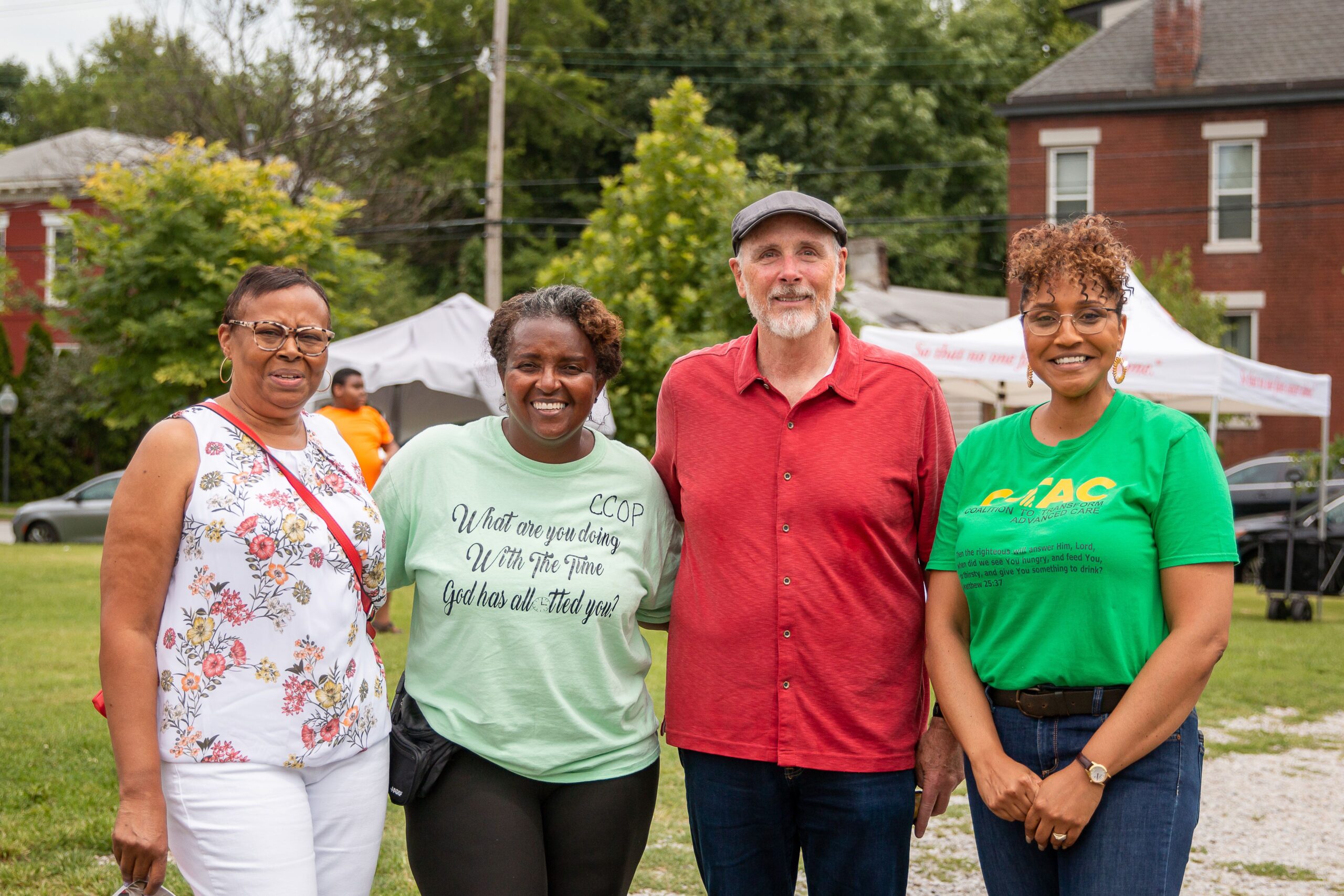 This local work will test care models that connect patients in our poorest neighborhoods to advanced care resources and support trusted caregivers – ministers and fellow church members – in their essential human service. From this C-TAC hopes to define a path to “better” that will drive advocacy for policy and payment reform.
– David Jones, Jr.