How a last meeting with Reverend Diane Smalley, a C-TAC patient advocate and Keynote Summit Speaker, led to insights on the nature of C-TAC’s work and Jon’s personal vocation.
It was an unusual setting to get a calling.
We were stuck in traffic on U Street in DC. And in the back seat was Rev. Diane Smalley and her friend, Roberta.
A few months earlier Diane had nearly died. She’d lived with stage IV cancer for years and the last time I’d seen her was her keynote at C-TAC’s 2015 Summit.
Standing on that National Academy of Science’s stage we hadn’t known that she was facing eviction because of medical bills. She wouldn’t have let on. The community rallied and she was able to get some financial relief. But the cancer kept going. Hospital visits kept coming. But here she was.
“I just got in from Detroit. How am I doing? Oh, I’m fine, I’m fine. Just tired. Don’t you worry about it, son,” she’d said on the phone the day before.
“You got a car?” she’d asked. “Good, good…,” she was thinking… “Come on over. Let’s see this town.”
When I picked up Diane, someone else got in the car with her. “Meet Roberta,” Diane said, “she’s coming too. And she doesn’t wear seat belts.”
“That’s right,” said Roberta, nodding.
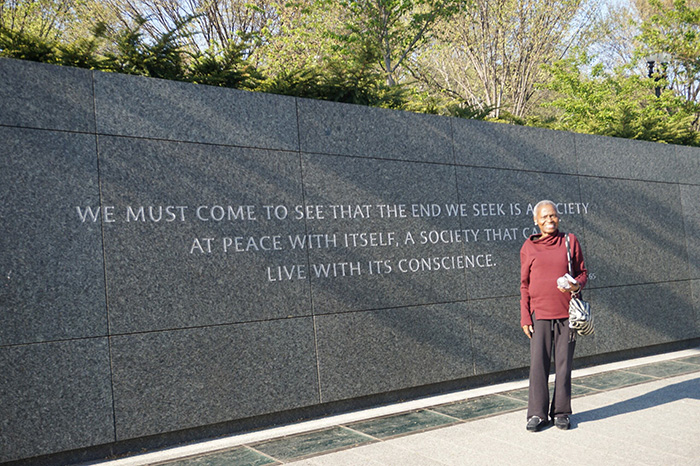
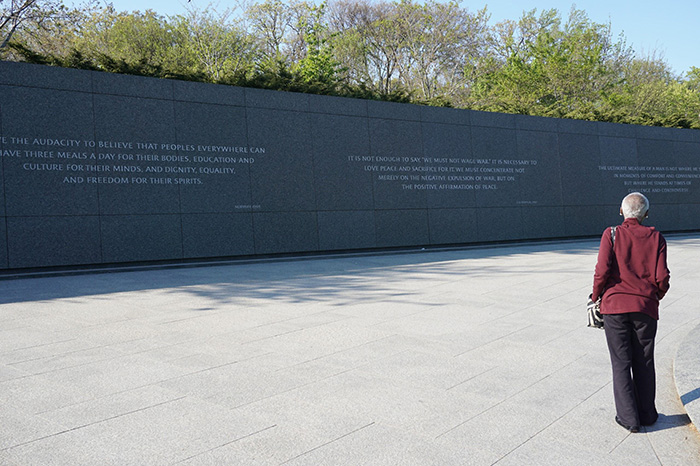
And here we were in the car going to the sites, Diane, Roberta, and me – the Lincoln Memorial, Martin Luther King Memorial, U Street, and then for ice cream with my wife, Debs.
“Sitting in traffic is part of the DC experience,” I joked. I was going to make another joke, this one about politics and traffic. Thankfully, Diane intervened.
Down went the back window.
“Hey. Hey you, lady.”
Round turned a woman writing on a pad.
“Hey. Hey honey.”
The woman bent down to look in with an ‘And You’re Going to Get It Next’ look.
“Hey, let me ask you something. “Look, I want to know something; I want to know…Are you the Parking Ticket Lady?”
The “Parking Ticket Lady” looked at me, sitting sheepishly in the front seat and then at Diane and Roberta in the back.
She just raised an eyebrow and kept looking at us.
“That’s good, good. I’m so GLAD you’re the Parking Ticket Lady,” said Diane.
Traffic thankfully started moving and I checked the rearview mirror and Diane started laughing. Roberta just shook her head trying not to laugh and just said, “That’s right, that’s right. That-right-there IS Diane.”
We kept moving. These two saintly pranksters carrying on.
“Diane, what brought you to town?” I asked.
“Botswana embassy – I came about a women’s welfare ministry there.”
“Wow, you had an appointment with the ambassador?”
“No. I just showed up.”
“That’s what happens when they don’t answer your emails,” Roberta laughed, then “You got THAT right. Diane will just show up.”
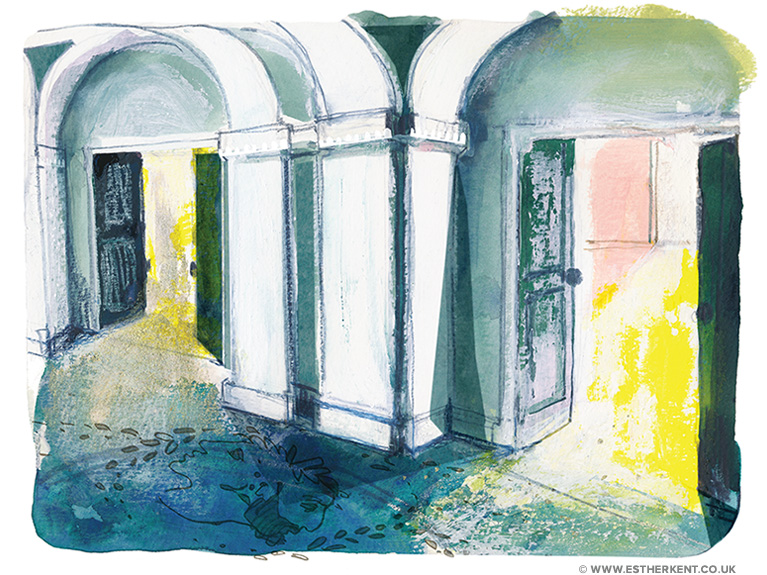
“Look, they had to let me in eventually…you know, you just have to open doors.”
The conversation trailed off with Roberta nodding as they both looked out the window at the Dr. Martin Luther King memorial.
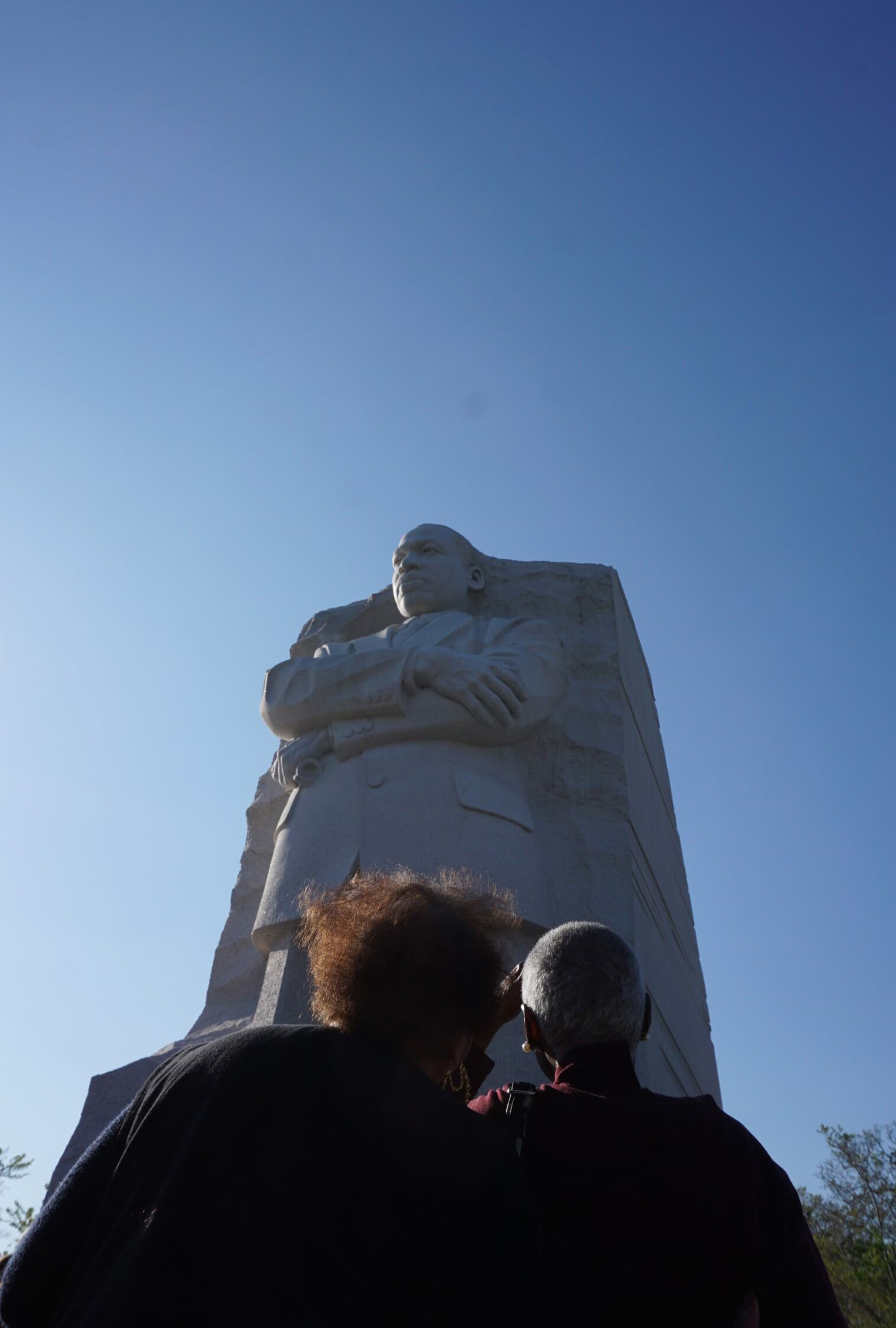 The way she’d said it, “You just have to open doors.”
It hadn’t caught me then.
Open doors.
Diane would pass away 6 months later. And maybe because it was one of the last things she’d said, I’ve started thinking more about it. What if she’d meant that “you” for me?
Was she pranking me?
For the first 5 years at C-TAC I’d thought that unless what someone had to say or do would end up in a peer reviewed medical journal, it wasn’t worth much. So, I didn’t say much, and I didn’t know what to do.
But here was Diane and she had something to say. And eight years later I’m still trying my best to hear it.
She had a way of needling. Diane had done it to the parking ticket lady, and it’d had left her with a smile.
And I’d seen Diane do the needling to C-TAC. “I don’t know what palliative care is – and I sure know that I’m not ready for it,” she’d said at her keynote at our Summit earlier that year. That’d troubled a lot of people. It had also led to a lot of good. Her remarks made us re-think how to include the people Diane called her “dream team” (faith community, primary care, oncologist) in palliative care models we tested and advocated for.
I’d seen Diane do all this and had been a part of it. Hell, I just didn’t realize till now that she’d done it to me.
She’d needled me and my conception of who I was and the grandiose belief I had of what I should be doing.
Maybe that’s why she’d thrown in the “just” — don’t think you have to come up with “the” solution, son. Just open the door.
But why do doors need to be opened?
Perhaps they’re stuck, locked, or hidden.
Doors are the way in. They’re also the way out. The way through the in-between.
Serious illness pushes us there, to this in-between, a nowhere. Living with cancer Diane must have felt the uneasiness, the uncertainty of moving from one part of life…to what?
Would she survive the downturns? Who would take care of her? Would she be able to pay the bills? Would she be able to make that trip to Botswana?
Near the end, she was in pain. Her family did everything that they could, but still she needed more support. We tried to get her into hospice — but no matter how we framed it, she didn’t want it. We never knew the root cause of why she turned it down, but she let on that it’d be like giving up.
I still believe hospice could’ve helped. And it still feels like a personal failure. But maybe Diane would say, just open doors…it’s not up to you if the person wants to go through them.
I still see her. I hear her.
I see in Diane the old Roman two-faced god who was the symbol of the in-between, Janus. One face to the old, another to the new. Janus is in our January – the transition from one year to the next. In our Janitor – the one with the keys to go in and out of doors. The transition of years, seasons, life.
Diane is that person standing in the in-between. One face to the future, of a vision of her dream team on her terms and it’s okay if I stir it up, son. “Hey, I’m a big mouth with an attitude,” she’d said.
And one face to the past, reminding me that there’s a whole lot of challenges she faced in her life – the prejudice of making it as an African American female pastor, the years of insecurity of not having health insurance – that made her suspicious of offers of help.
And she’s telling us now, today: Just open doors. It’s not up to you, son, if they go through them. So, I feel a little like a kid when I see closed doors now and want to open them all up. Partly to needle, partly to do good – thinking of my patron saint, Rev. Smalley, who gave me this vocation.
And she’d say: Let me tell you, I’m a jazzy old girl. And one thing I believe is that you’ve got to have a song in your heart to get through life. And you got to pass that song on to others…